 RailTrailWxRailTrailWx

E-bikingBikingWalkingRunningand more
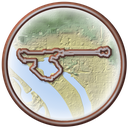
The National Mall Loop is a loop of about 6.5 miles through National Mall and Memorial Parks in Washington, DC. It starts and ends at the Lincoln Memorial. The route heads east past the World War II Memorial and the Washington Monument, then runs along the museums of the Mall to the United States Capitol. On the way back it swings south around the Tidal Basin, past the Thomas Jefferson Memorial and the Martin Luther King, Jr. Memorial. The ground is flat and the sky is mostly open, on paved walks and park drives.
National Mall Loop
Your comfort. Prognosticated.
-Cory

In a typical year the National Mall Loop has about 117 to 164 days of excellent weather for popular activities such as hiking, dog walking, e-biking, birding, running, biking, and walking, with April, October, and November the best months.
Hourly comfort scores for the next 15 days of weather, tuned to your activity and your own thresholds.
Plan your visit to this trail. Get the best windows for a comfortable outing.
Enjoy the National Mall Loop!

In half of past years, color along the National Mall Loop peaks November 2 to 12, typically around November 7. The trail has 13% deciduous coverage, with the majority being yellow-poplar, sweetgum, white oak, red maple, and southern red oak.
Pierre L'Enfant drew the Mall in 1791 as the centerpiece of a new capital. He meant it as a public space for learning and recreation. Most of that vision stayed on paper for a century. In 1870 a railroad terminal went up on the Mall, and its tracks cut straight across the open ground. West of the Washington Monument lay the Potomac Flats, mud flats and marsh along the river. In 1882 the Army Corps of Engineers began dredging the Potomac and dumping the mud onto the flats. The basin they shaped, finished in the 1890s, uses the river's tides to flush the Washington Channel. The filling went on until 1911. By then contractors had moved over 12 million cubic yards of material, enough to build East and West Potomac Parks and the Tidal Basin. In March 1901 Senator James McMillan won a Senate resolution creating a park commission. Its plan, unveiled in January 1902, set a monument to Lincoln at the western end, tied to the Washington Monument by a long reflecting pool. The plan also reserved the site of the Jefferson Memorial, dedicated in 1943. Union Station opened in 1907, and the tracks left the Mall. In 1912 the people of Tokyo gave the city 3,000 cherry trees. The National Park Service runs the Mall today. This loop is not an official trail. RailTrailWx traced it along park walks and drives to link the memorials in one circuit.